You should replace a consumer unit if it has rewireable fuses, no RCD protection, signs of scorching or buzzing, or no room for new circuits such as an EV charger. Wylde Green Electrical fits metal consumer units with RCBO or RCD protection and surge protection, and notifies the work under Part P.
Wylde Green Electrical Ltd, NAPIT registered (NAPIT). Published and last reviewed: .
At a glance
- Replace if
- Rewireable fuses, no RCD, scorching, buzzing, no spare ways
- Housing
- Metal (non-combustible) units required in homes since 2016
- Devices
- RCD or RCBO, SPD and, where required, AFDD
- Typical time
- Most of a day, with the power off for much of it
- Paperwork
- Notifiable under Part P; you receive a certificate
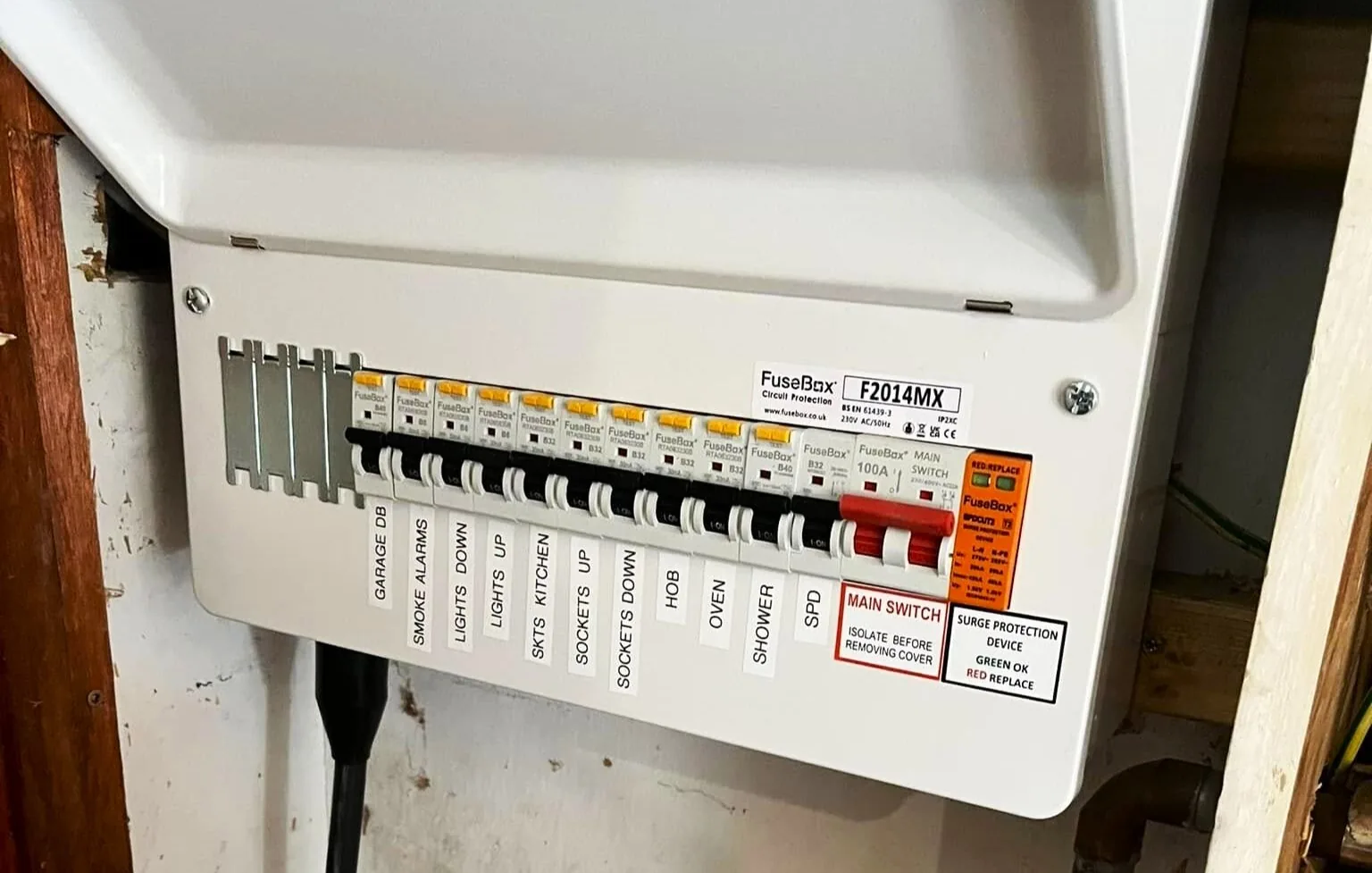
The consumer unit, often still called a fuse box, controls and protects every circuit in your home. Knowing when to replace a consumer unit is one of the most useful things a homeowner can learn, because a modern board adds protection against electric shock and fire that older boards simply do not have.
When should you replace a consumer unit?
- It has rewireable fuses (a fuse wire in a ceramic or plastic carrier)
- There is no RCD protecting the sockets and other circuits
- It is mounted on a wooden backboard or has a cracked or scorched case
- It buzzes, smells hot, or a breaker feels warm
- You need new circuits for an extension, EV charger or solar panels and there are no spare ways
- An EICR has given it a C2 code
What does each device in a modern consumer unit do?
| Device | Protects against | Notes |
|---|---|---|
| MCB | Overload and short circuit | Replaced rewireable fuses |
| RCD | Electric shock and earth leakage | Usually protects a group of circuits |
| RCBO | Both of the above, per circuit | One fault only switches off its own circuit |
| SPD | Transient overvoltages (surges) | Expected in most new installations |
| AFDD | Arc faults that can start fires | Recommended for many circuits; required in some higher-risk buildings |
These requirements come from BS 7671, the IET Wiring Regulations, which are amended every few years. Since 2016, consumer units in homes must have a non-combustible enclosure, which in practice means a metal case.
Do I have to replace a consumer unit that works?
There is no law requiring homeowners to replace a working board. Landlords must keep their installation safe under the private rented sector rules, though. An old board without RCD protection is one of the most common reasons homes are advised to upgrade. If you are unsure, an EICR will tell you.
What happens when you replace a consumer unit?
- Test first. Existing circuits are tested, because RCD protection exposes hidden faults.
- Swap the board. The power is off while the old board is removed and the new one connected.
- Test again. Every circuit is tested and labelled.
- Certify. Replacing a consumer unit is notifiable under Part P, so a registered electrician self-certifies it.
Wylde Green Electrical carries out consumer unit upgrades in Sutton Coldfield and explains any faults the new board reveals before going further.
Frequently asked questions
How do I know if my consumer unit needs replacing?
Replace it if it has rewireable fuses, no RCD protection, a wooden backboard, scorch marks, buzzing, or no spare ways for new circuits you need. An EICR will confirm whether it is safe.
Is it a legal requirement to replace an old fuse box?
Homeowners are not legally required to replace a working fuse box. Landlords must keep their installation safe, and an old board without RCD protection is often coded on an EICR as needing improvement or remedial work.
Why do consumer units have to be metal now?
Since 2016, BS 7671 has required consumer units in homes to have a non-combustible enclosure, to contain a fire if a connection inside overheats. In practice that means a metal case.
What is the difference between an RCD and an RCBO?
An RCD protects a group of circuits against electric shock, so one fault can switch several off. An RCBO protects a single circuit against both shock and overload, so a fault only switches off that circuit.
Do I need Building Regulations approval to replace a consumer unit?
Yes. Replacing a consumer unit is notifiable under Part P. A registered competent person, such as a NAPIT registered electrician, can self-certify the work and you receive a compliance certificate.