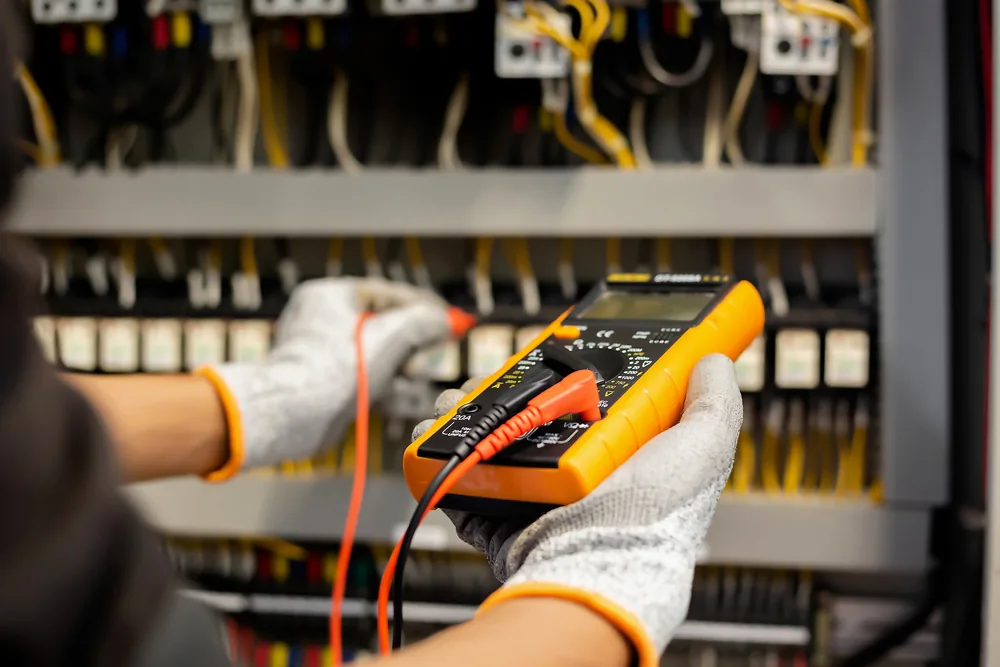
Landlord electrical safety rules in England require private landlords to have the fixed wiring inspected and tested at least every five years, give tenants a copy of the report and finish any required remedial work within 28 days. Wylde Green Electrical carries out these inspections and remedial work for landlords across Sutton Coldfield and Birmingham.
Wylde Green Electrical Ltd, NAPIT registered (NAPIT). Published and last reviewed: .
At a glance
- Law
- Electrical Safety Standards in the Private Rented Sector (England) Regulations 2020
- Frequency
- At least every five years, or sooner if the report says so
- Tenants
- Copy within 28 days; new tenants before they move in
- Council
- Copy within 7 days of a written request
- Repairs
- Within 28 days, or sooner if the report specifies
Since 2020, landlord electrical safety in England has been governed by the Electrical Safety Standards in the Private Rented Sector (England) Regulations 2020. They applied to new tenancies from 1 July 2020 and to all existing tenancies from 1 April 2021. This guide summarises what they require. The official GOV.UK guidance has the full detail and is the place to check for any later changes.
What must landlords do under the 2020 regulations?
- Meet the standards. The installation must meet the national standards in BS 7671 during the tenancy.
- Inspect and test. A qualified and competent person must inspect and test the installation at least every five years.
- Share the report. Give existing tenants a copy within 28 days and new tenants a copy before they move in.
- Respond to the council. Supply a copy to the local authority within 7 days of a written request.
- Fix defects. Complete remedial or investigative work within 28 days, or sooner if the report says so.
- Confirm in writing. Give tenants and the local authority written confirmation within 28 days of completing the work.
Which tenancies do the rules cover?
The regulations cover most private tenancies in England, including assured shorthold tenancies and houses in multiple occupation. Some arrangements are excluded, such as lodgers who share the landlord's home and long leases. Wales and Scotland have their own rules, so landlords there should check local guidance.
What happens if a landlord does not comply?
Local authorities can serve remedial notices, arrange urgent work themselves and recover the cost, and impose financial penalties of up to £30,000 for a breach. Keeping reports, certificates and written confirmations together is the simplest protection.
How should landlords plan landlord electrical safety work?
- Diary the next inspection well before five years are up, or sooner if the report sets an earlier date
- Book inspections between tenancies where possible, so remedial work is easier
- Ask for itemised remedial quotes, and keep certificates for the work
- Consider a rewire during a void period if several circuits keep failing
Wylde Green Electrical carries out landlord EICRs in Sutton Coldfield, Erdington and across the area. Our guide to EICR codes explains what each observation means.
Frequently asked questions
How often do landlords need an electrical safety certificate?
In England, private landlords need an Electrical Installation Condition Report at least every five years, or sooner if the previous report recommends an earlier date.
Do landlords have to give tenants a copy of the EICR?
Yes. Existing tenants must receive a copy within 28 days of the inspection, and new tenants must receive one before they occupy the property. Prospective tenants can ask for one too.
What is the deadline for EICR remedial work?
Landlords must complete remedial or investigative work within 28 days of the inspection, or sooner if the report says so, then give written confirmation to tenants and the local authority.
What is the fine for not having an EICR?
Local authorities in England can impose financial penalties of up to £30,000 for breaches of the 2020 regulations, as well as arranging urgent work and recovering the cost.
Do the rules apply to HMOs?
Yes. Houses in multiple occupation are covered by the 2020 regulations, and the five-yearly inspection applies to them in the same way as to other private rented homes.