A home EV charger installation involves a survey of your supply and parking, a dedicated circuit with RCD protection, protection against supply faults, notification to the network operator, and testing and certification. Wylde Green Electrical completes most home installations in a single visit of around half a day.
Wylde Green Electrical Ltd, NAPIT registered (NAPIT). Published and last reviewed: .
At a glance
- Typical time
- Around half a day for most homes
- You need
- Off-street parking and a suitable supply
- Smart rules
- Home chargers sold in Great Britain must have smart functions
- Network operator
- Notified by the installer; some supplies need approval first
- Paperwork
- Electrical Installation Certificate and Part P certificate
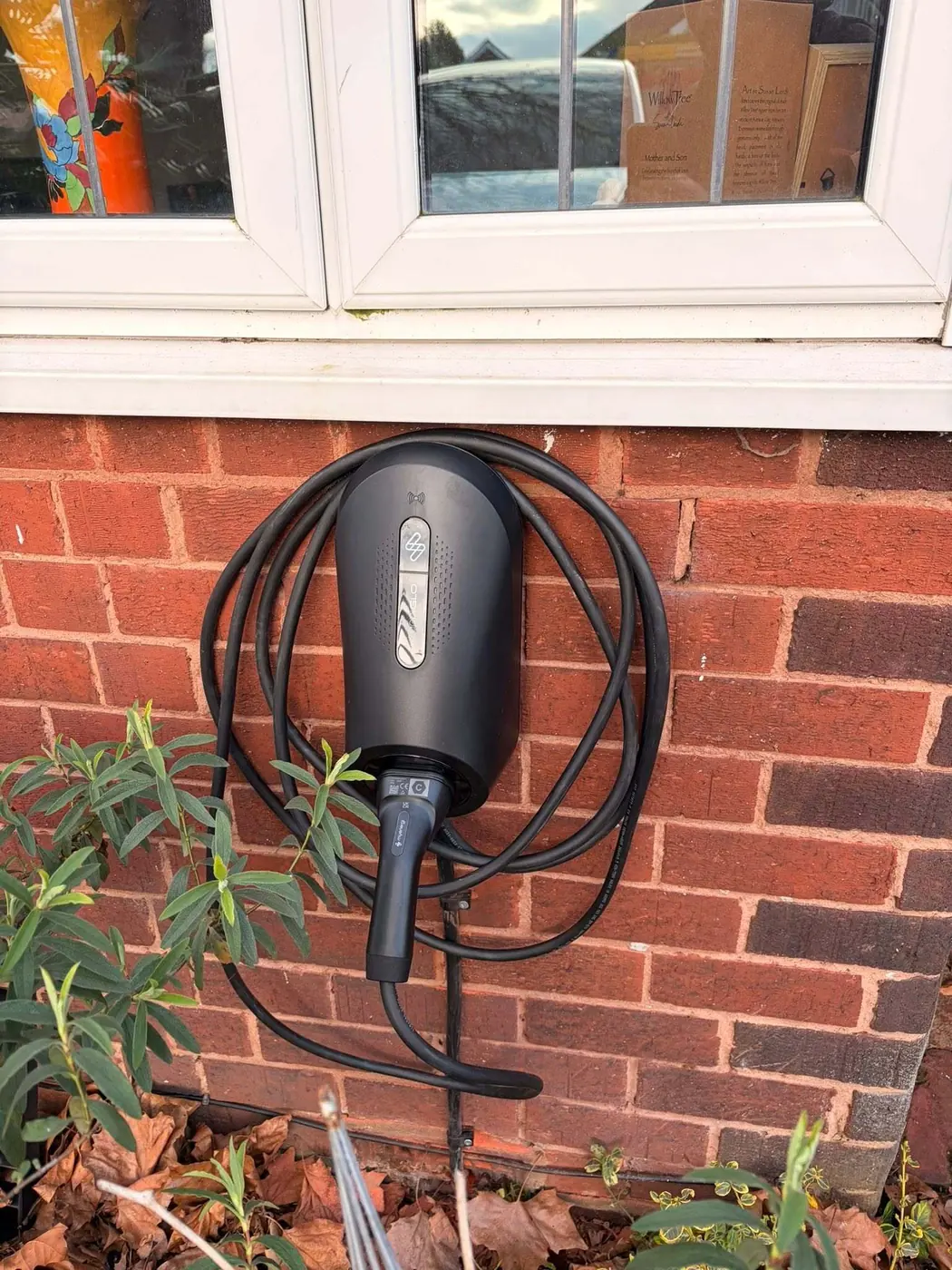
A home EV charger installation is a significant electrical job: the charger can draw up to 32 amps for hours at a time, which is more than almost anything else in a typical home. That is why the work starts with checks, not with drilling.
What happens during a home EV charger installation?
- Survey. The electrician checks the main fuse, consumer unit, earthing, meter position and cable route to your parking space.
- Charger choice. Tethered or untethered, smart features, and solar compatibility if you have panels.
- Dedicated circuit. A new circuit with suitable RCD protection is run from the board or a new enclosure.
- Earthing. Protection against a broken supply neutral, either built into the charger or provided separately.
- Network operator. The installer notifies the network operator, or applies first if the supply needs assessing.
- Testing and handover. The circuit is tested to BS 7671, certified, and the app is set up.
Is my house suitable for a home EV charger installation?
Most houses with off-street parking are. The questions are the size of your main fuse, whether your consumer unit has space and suitable protection, and how far the charger is from the board. A charger with load management can reduce its output when the house is busy, so a full supply upgrade is rarely needed.
What are the smart charger rules?
Since 2022, chargers sold for home use in Great Britain must have smart functions under The Electric Vehicles (Smart Charge Points) Regulations 2021. They must be able to schedule charging, respond to signals from the grid and randomly delay their start time. In practice it means you can set your car to charge on a cheaper overnight tariff.
Do I need permission for a home EV charger?
A wall-mounted charger on a house is usually permitted development in England, so planning permission is not normally needed. Listed buildings, flats and some properties in conservation areas can need consent. The network operator also needs to know about the charger, and that notification is part of the installer's job.
Are there grants for home chargers?
Government chargepoint grants have changed several times and currently focus on people in flats and rented homes rather than owners of houses with driveways. Check current eligibility on GOV.UK before booking.
Wylde Green Electrical carries out EV charger installation in Sutton Coldfield. We can design a charger alongside solar panels and battery storage.
Frequently asked questions
How long does a home EV charger installation take?
Most home EV charger installations take around half a day. Long cable runs, thick walls or a consumer unit upgrade can make the job longer.
Can I install an EV charger without a driveway?
A home charger needs off-street parking. Running a charging cable across a public pavement is not a safe or acceptable solution, so people without a driveway usually rely on public or workplace charging.
Does my consumer unit need upgrading for an EV charger?
Only if it has no spare way or lacks suitable protection. Many boards can take a charger circuit as they are, and the survey will show whether yours can.
Do I need to tell my energy supplier about a home charger?
The installer notifies the network operator, which runs the local cables. You only need to contact your energy supplier if you want to switch to an EV or off-peak tariff.
What is a smart EV charger?
A smart charger can schedule charging for cheaper times and respond to signals from the grid. Since 2022, chargers sold for home use in Great Britain must have these smart functions.